Published by ReviewRemoval. Authorship, sources and correction standards.
On this page
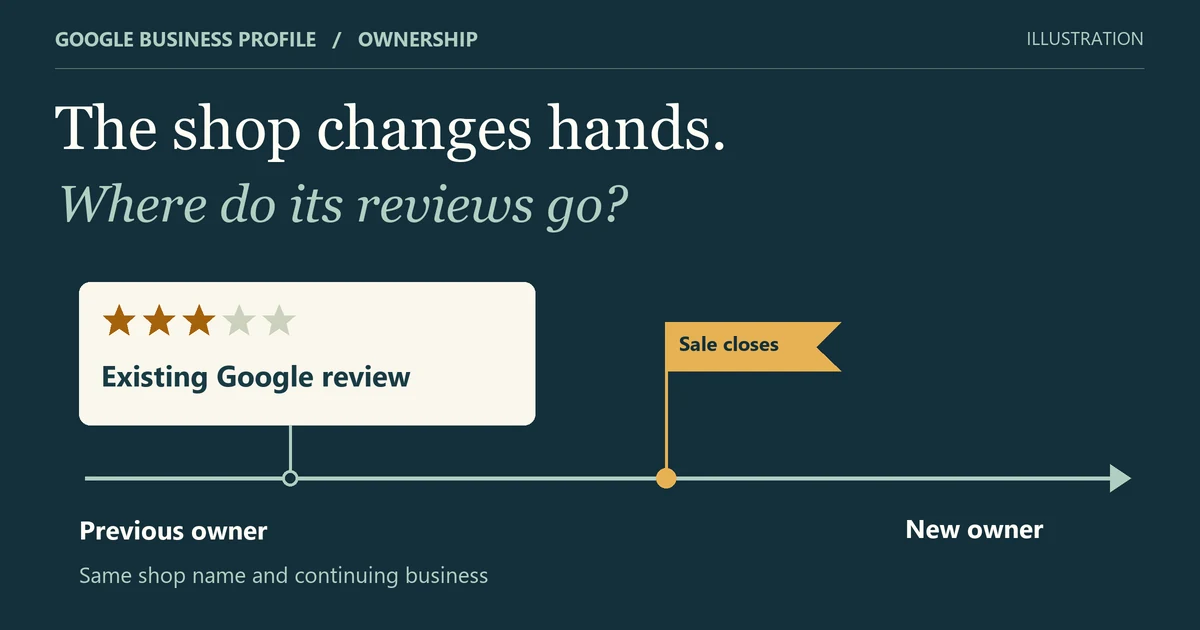
If you buy a business and keep its name, Google says its reviews stay on the Business Profile. That includes the five-star recommendations that helped you choose the business as well as the complaints that predate your arrival. A sale on its own gives you no basis to clear the review history. Google’s review transfer rules.
Take control of the profile customers already use
Ask the seller to open the listing you both see on Maps and add your own Google Account as an owner. The primary owner can then transfer primary ownership in the profile’s People and access settings. A new owner or manager faces a seven-day waiting period for some actions, including becoming primary owner. Build that into the handover date and use your own sign-in throughout. Google’s primary ownership instructions.
If someone already created and verified a second profile because of the sale, save both Maps links. Google directs businesses in that situation to contact support about transferring reviews. This is useful when a regular customer searches for you and finds two pins with different review counts. Google’s help for accidental duplicates.
Does the old profile still describe the business?
- Same sign, same service, new operator.
- A Winnipeg shoe repair shop changes hands and keeps trading under the same name. Transfer the existing profile and update any hours or contact details that have actually changed.
- The name on the sign changes slightly.
- For a single-location business, compare the old and new names. Google’s minor-rebrand criteria look at whether the proper nouns, services named and business category stay the same. Multi-location name changes have a separate eligibility provision.
- A different business opens in the same unit.
- Suppose the shoe shop closes and a dog grooming salon opens there. When a name change falls outside the rebranding criteria, Google directs owners to mark the old business closed and create a profile for the new business. Closing a profile does not erase its historical reviews.
Use the signage, services and name customers actually encounter to identify the right case. Google’s business representation and rebranding guidelines.
Three things to collect at closing
- The public Maps link for each location. Open each link with the seller and check the street address. This matters when two branches have similar names.
- The customer-facing change and its date. Record the day the sign, services or hours changed. The legal closing date and the date a customer first saw a change can differ.
- Any open review reports. Record the review link, decision or pending status and existing case reference. The next manager can log subsequent status checks in the Google review case tracker.
When should you reply, and when should you report?
Imagine a customer wrote that the shop never called when their shoes were ready. If you have introduced a pickup notification, an appropriate reply could be: “We took over in September and now send a text when repairs are ready. Thank you for describing what happened.” Only mention an improvement you have actually made.
Now consider an old review showing a staff member’s private mobile number. The sale date adds little to the case. The useful facts are where the disclosure appears and how you know the number is private. You can report a specific policy concern through Google for free. How to document a private disclosure · Report a review to Google.
Need help with a specific review?
If one inherited review raises a specific policy concern, send its link and explain what you can verify. ReviewRemoval offers a free assessment for Canadian businesses.
Assess an inherited Google review