Published by ReviewRemoval. Authorship, sources and correction standards.
On this page
Yes, you can report a Google review based on a former employee’s relationship with your business. Start with the detail that connects the post to the job. A one-star rating the morning after someone leaves may prompt you to look, but the timing alone tells you very little about who wrote it.
When does past employment matter?
Google identifies current or former employment as a possible conflict of interest in reviews. That gives an employer a specific question to investigate. Does the wording or another reliable fact connect this contribution to that relationship? Look for the same evidence whether the post praises management or criticizes it. Google Maps policy on rating manipulation and conflicts of interest.
Three reviews a café manager might receive
Imagine a Halifax café gets one of the following posts. Each deserves a different response.
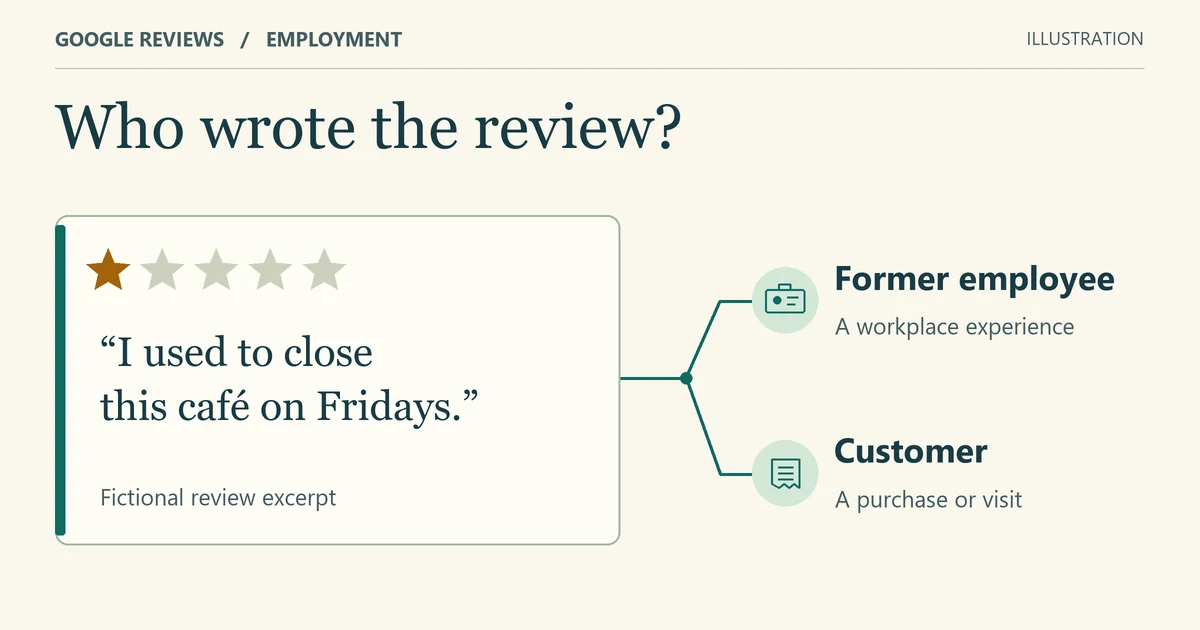
- “I used to close this café on Fridays. The manager changed my shifts every week.” The writer describes working at the café in their own words. Save that passage and the link. A case note can identify the work-related subject without debating the scheduling complaint.
- “My takeaway coffee was cold.” The manager recognises the display name as a former colleague’s. There are two separate questions here. Can the manager reliably identify the writer, and what do they know about the visit? A former staff member can also buy a coffee. Record a known employment connection and a known purchase accurately, including facts that complicate the case.
- One star, no text, an unfamiliar account. A recent departure is the only apparent link. There is no stated workplace experience to quote. Keep the observation dated and leave the author’s identity open.
What would you put in the report?
“The writer says they used to close this location on Fridays. The complaint concerns how the manager assigned shifts. We are asking for an assessment under the conflict-of-interest policy.”
That fictional note relies entirely on the public post. If a manager also has firsthand knowledge, write down what that person can confirm. A dismissal letter can expose an address, pay information and other employees’ names. Keep it out of the initial assessment. If Google requests supporting material through a suitable channel, choose the smallest relevant extract and redact unrelated details.
A public reply has a different audience. Future customers can read it long after the dispute ends. If you reply, keep the discussion of individual employment matters private. When the post itself discloses someone’s sensitive details, use the guide to private information in Google reviews.
File the report and keep the decision
Open the review on the affected Business Profile and use its reporting control. Select the available reason that best matches the facts. Keep the review link, the date and any status Google provides. If Google finds no violation, check whether its tool offers a one-time appeal. Prepare the particular work-related passage or corroborating fact you want reconsidered. Google’s reporting and appeal instructions.
You can use that route yourself for free. If you want someone to review a mixed customer-and-employee case before you use an appeal, ReviewRemoval can assess the public post and explain the work it could undertake. See what an assessment covers after a report.
Need help with a specific review?
For a free assessment, send the public Google review link and one sentence about the work connection you can substantiate. Keep personnel records with your business.
Assess a possible employment conflict